

Writing a research paper is an important part of academic life. Almost every student and researcher has to do it at some stage. However, many people feel stuck when they reach the introduction section. They are unsure how to begin. They do not know how much detail is enough. Some worry that their introduction is either too long or too weak.

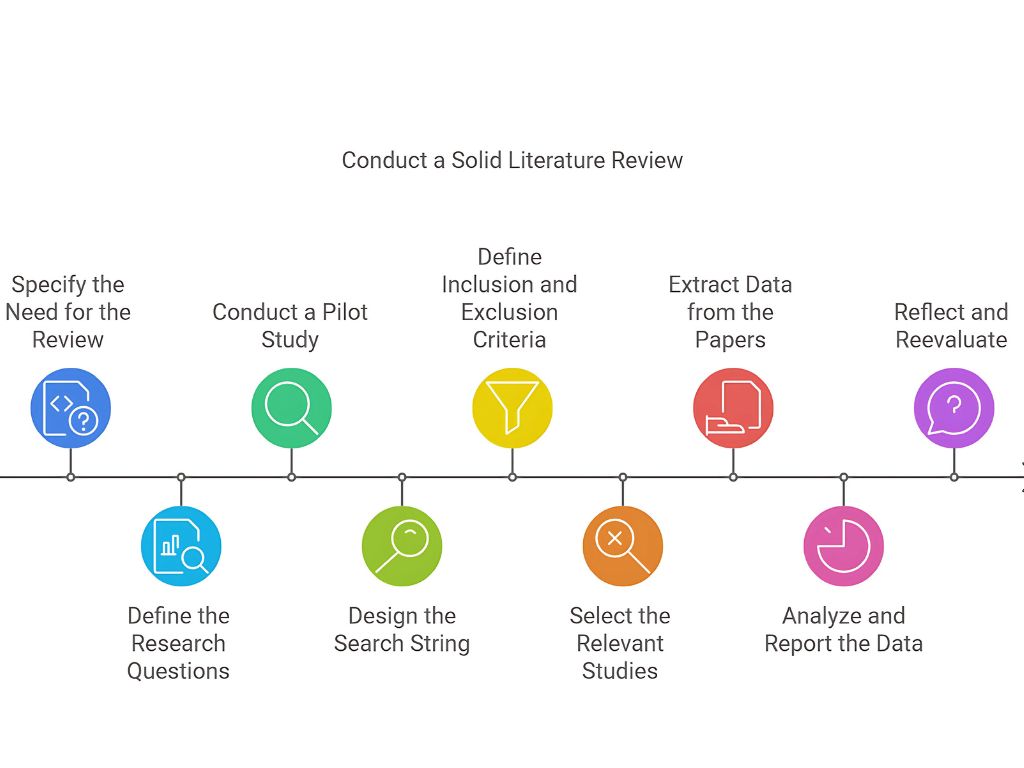
How to identify papers for your literature review in 2 minutes?
Try WisPaper: www.wispaper.ai
This is a search engine for research papers.
It understands your request and returns you with the exact papers you need.
In this blog post, you will learn how to write a clear and effective introduction section for a research paper. The explanation follows a simple six-part structure that is widely used in academic writing.
But before that, do you know what the actual introduction of a research paper is? Let’s explore that without further ado!

What Is the Introduction Section of a Research Paper?
The introduction is the first main section of a research paper. It appears after the abstract and before the main body. Its purpose is to explain what the research is about, why the topic is important, and what problem the study addresses.
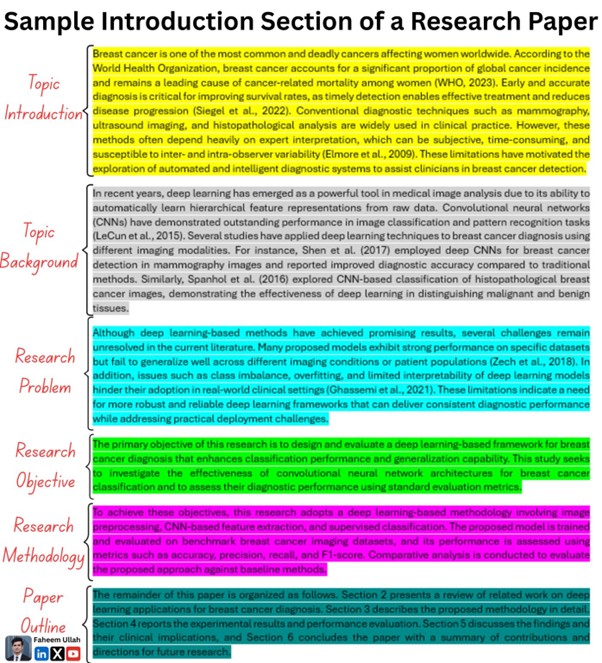
Academic writing guidance from major publishers such as Springer Nature explains that the introduction should establish background, explain motivation, and guide the reader toward the research focus. In simple terms, the introduction works like a map. It helps the reader understand where the paper is going and why the journey matters. A strong introduction also sets expectations. Many readers and reviewers decide whether to continue reading based on how clearly the introduction explains relevance and purpose. A good example of the Introduction section is given below.
Why Is the Introduction Section Important?
The introduction is important because it creates the first impression of the research. Even strong results can be overlooked if the introduction fails to explain why the study matters.
Major academic publishers such as Elsevier note that reviewers often assess clarity and relevance early in the manuscript, starting with the introduction.
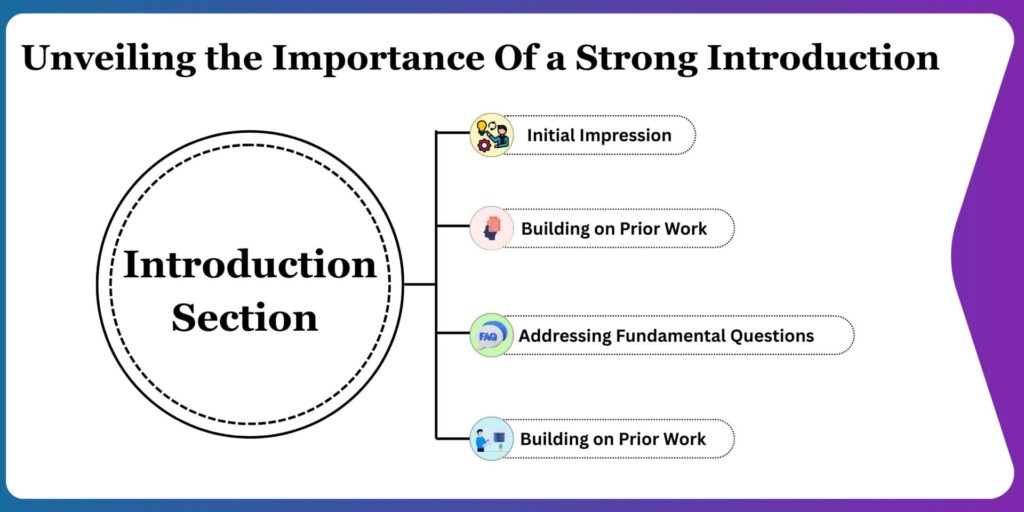
The introduction answers three basic questions for the reader:
· What is this research about?
· Why is it important?
· What problem does it address?
When these questions are answered clearly, readers are more likely to engage with the rest of the paper.
Six Parts of a Strong Introduction Section
A good introduction is not written randomly. Instead, it follows a clear and logical flow. Writers usually move from a general topic to background information, and then to a specific research problem.
University writing guides explain that strong introductions follow this general-to-specific structure to help readers understand the context before focusing on the research contribution.
Purdue Online Writing Lab – Research Paper Introductions
This approach is also supported by major university writing centers, which explain how introductions narrow from broad context to focused purpose.
University of North Carolina Writing Center– Introductions
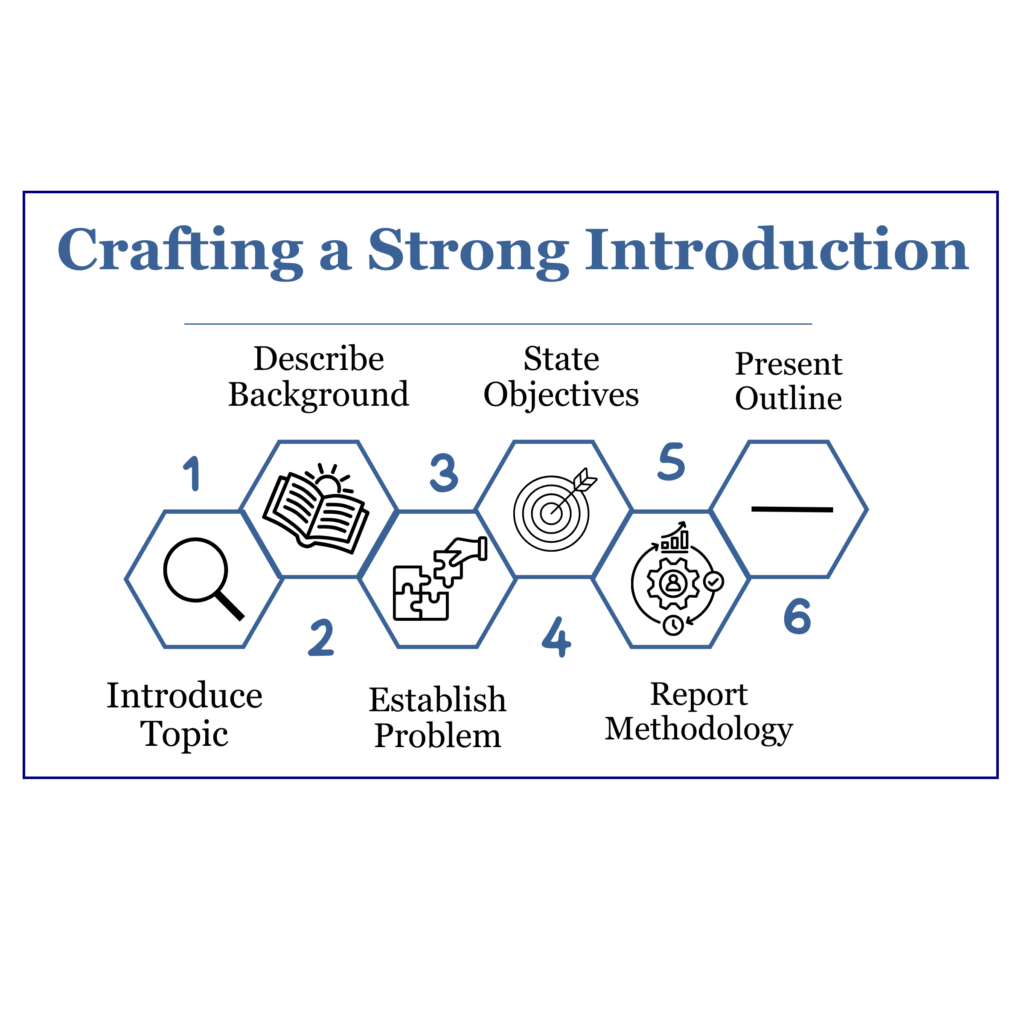
Below is a simplified six-part structure based on this widely accepted academic writing approach.
1. Introduce Your Topic
The introduction should begin by presenting the general topic area of the research. At this stage, the goal is to help the reader understand the subject and why it matters in a broader context.
Academic writing guides recommend starting with general ideas or real-world relevance rather than technical detail.
This approach helps build interest and prepares the reader for more focused discussion later.
2. Describe the Background
After introducing the topic, the next step is to briefly describe what other researchers have already studied. This shows that the research builds on existing knowledge rather than standing alone.
Researchers commonly use trusted academic databases such as:
The goal here is not to review all literature in detail but to show awareness of the current research landscape.
3. Establish research Problem:
After discussing previous work, the introduction should clearly explain the research problem or gap. A strong research problem is a clear statement about what is missing, unclear, or not solved yet, and why it matters.
A public university writing guide from USC Libraries explains that a research problem is a clear expression of an area of concern, a condition to improve, or a difficulty to solve.
The research problem should be:
· Clear and easy to understand
· Connected to the background discussion
· Specific enough to guide your study
A well-defined problem helps the reader understand why the study is needed and what your paper is trying to contribute.
4. Clearly State the Research Objectives
Once the problem is identified, the introduction should state the objectives of the study. Objectives explain what the research aims to achieve and give direction to the work.
Author guidelines from major publishers recommend stating objectives clearly and concisely.
Clear objectives help readers and reviewers evaluate whether the study achieves its goals.
5. Briefly Report the Methodology
The introduction should also provide a short overview of how the research was carried out. This may include mentioning the research design, data type, or general approach.
According to Nature Masterclasses, this overview should remain high-level and avoid technical detail.
Detailed methods should be explained later in the paper.
6. Present the Outline of the Paper
The final part of the introduction explains how the paper is organized. This helps readers understand what each section contains and what to expect next.
Academic writing resources such as the IEEE Author Center recommend including this roadmap, especially in longer papers.
A clear outline improves readability and reduces confusion.
Common Mistakes to Avoid in an Introduction
Editors and peer reviewers frequently report similar problems in weak introductions. Common issues include:
· Very long or complex sentences
· Too much technical detail at the start
· Unclear research problems
· Poor flow between ideas
Reviewer guidance from Elsevier highlights these issues as frequent reasons for negative feedback.
Avoiding these mistakes improves clarity and reader engagement.
General Tips for Writing a Strong Introduction
Author training platforms consistently recommend a few simple best practices:
· Use reliable sources to support claims
· Keep language clear and simple
· Move from general ideas to specific points
· Proofread carefully
Helpful guidance is available from:
· Springer Author Resources
Following these principles helps ensure that the introduction sounds confident and credible.

Final Thoughts
The introduction section is the foundation of a research paper. It explains the topic, provides background, defines the research problem, and outlines the study’s purpose and structure.
Academic publishers and editors consistently highlight the importance of a strong introduction. By following a clear structure and supporting ideas with trusted sources, researchers can greatly improve the clarity and impact of their work.
A strong introduction does not just begin a paper—it invites the reader into the research.
Thank you so much Dr. Faheem, it's a compelling, rigorous, and taught introductory part of a strong research paper. Which is also very credential because of evidence-based towards well-known and respected global academic institutions.