

Starting a PhD is exciting. You enter with a research topic, big ambitions, and the hope that one day people will call you “Dr.”
But a PhD is very different from what most of us imagine before starting one.
I completed my PhD at the University of Adelaide, Australia, and looking back, I realize that some of the most important lessons I learned were not written in any research handbook. They came from experience—working with supervisors, dealing with failed experiments, managing time and finances, receiving paper rejections, and trying to stay motivated when research was not going according to plan.
AI tools of the week:
Review-it : A platform for reviewing research papers to get feedback.

Gatsbi : An AI tool for generating complete literature reviews

ResearchCollab : An AI-powered tool for systematic literature reviews

HumanizeThis : A platform for humanizing AI-written text.

If I were starting my PhD again, these are the 10 things I would want to know from day one.

1. Your Supervisor Can Make a Huge Difference
Your research topic is important, but your supervisor is equally important—perhaps even more important.
A good supervisor does more than correct your thesis. They guide you when you are stuck, challenge your ideas, help you become an independent researcher, introduce you to opportunities, and support your academic development.
Before choosing a supervisor, do your homework. Look at their recent publications, research interests, current students, and supervision style. If possible, talk to their existing or former PhD students.
Most importantly, discuss expectations before starting. How often will you meet? How quickly can you expect feedback? What are the publication expectations? How much independence will you have?
A famous professor is not automatically the best supervisor for you. Research fit, communication, availability, and mutual expectations matter enormously.
2. A PhD Is More About Self-Learning Than Being Taught
This surprised me.
During undergraduate and Master’s studies, we are used to taking courses, attending lectures, completing assignments, and being told what to learn.
A PhD is different.
Nobody will teach you everything you need to know.
You may suddenly need a research method, statistical technique, programming language, software package, or theoretical concept that you have never used before.
You have to learn it yourself.
Read papers. Watch lectures. Take online courses. Read documentation. Ask other researchers. Experiment. Make mistakes and try again.
Your supervisor is there to guide you, but they are not there to give you the answer to every problem.
One of the most valuable abilities you can develop during a PhD is simply this:
Learn how to learn independently.
That skill will remain useful long after your PhD is finished.
3. Your Mental and Physical Health Matter
A PhD can involve long hours of sitting, reading, coding, writing, and staring at a computer screen.
It can also be mentally exhausting.
There will be periods when experiments fail, papers are rejected, deadlines pile up, and you start comparing your progress with other students.
Do not sacrifice your health for your PhD.
Exercise regularly. Get enough sleep. Eat properly. Take breaks. Spend time with family and friends. Go outside. Have interests that have nothing to do with your research.
And when things become overwhelming, talk to someone and use professional support services when needed.
Your thesis is important, but your health is more important than your thesis.
4. Motivation Will Not Always Be There
When you begin your PhD, motivation is usually high.
You have a new university, a new research project, and lots of ideas.
But a PhD lasts for years.
You will not wake up motivated every morning for three or four years. Some days, you may not even want to open your laptop.
That is normal.
This is why you should not depend entirely on motivation. Develop a routine and a system.
Instead of saying, “I need to finish my thesis,” break the goal into something smaller:
“Today I will write 500 words.”
“This week I will analyze this dataset.”
“Before Friday, I will finish this experiment.”
Small achievements create momentum.
Motivation gets you started. Consistency gets you through a PhD.
5. Time Is One of Your Most Valuable Resources
At the beginning of a PhD, three or four years can seem like a very long time.
It isn’t.
Months can disappear surprisingly quickly.
You spend a few weeks reading. Then another month experimenting. Your experiment fails. You change the methodology. You wait for data. You revise a paper. Suddenly, a year has passed.
Learn to manage your time from the beginning.
Set monthly, weekly, and daily goals. Keep track of important deadlines. Start writing early instead of waiting until the end of your PhD.
Most importantly, understand that being busy is not the same as making progress.
You can spend eight hours answering emails, formatting documents, attending unnecessary meetings, and browsing papers without moving your research forward.
Ask yourself regularly:
“What is the most important thing I can do today to move my PhD forward?”
Then do that first.
6. Paper Rejections Are Part of Research
You spend months working on a paper.
You carefully write every section, prepare beautiful figures, check the references, and finally submit it.
Then comes the email:
Rejected.
It hurts—especially the first few times.
But rejection does not mean that you are a bad researcher.
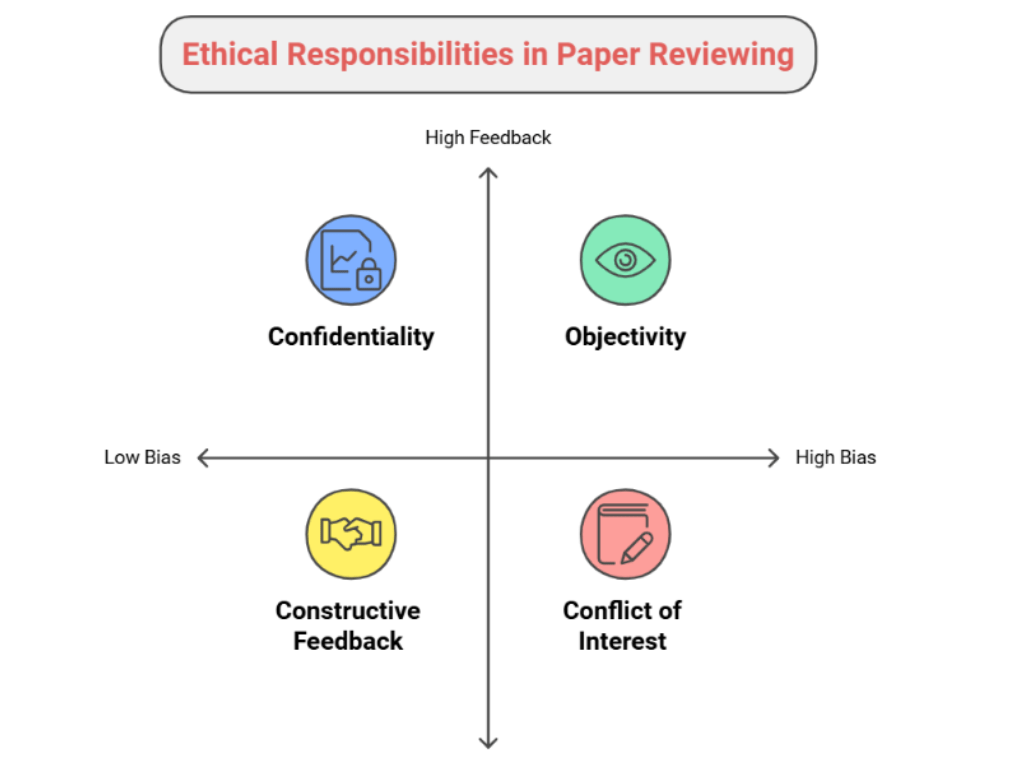
Almost every active researcher experiences rejection. Sometimes reviewers identify genuine weaknesses. Sometimes the paper is not suitable for that journal. Sometimes reviewers disagree with each other. Sometimes good research simply needs another round of improvement.
Read reviewer comments carefully. Separate useful criticism from comments you disagree with. Improve the manuscript and try again.
Do not let one rejection stop months or years of work.
In research, rejection is not necessarily the end of a paper. Very often, it is simply another stage of the publication process.
7. There Can Be Financial Challenges
This part of PhD life is not discussed enough.
Depending on your scholarship and personal circumstances, finances can become stressful.
Your stipend may need to cover rent, food, transport, bills, health expenses, and other living costs. International students may also face relocation expenses, flights, visa-related costs, and unexpected expenses.
And life does not stop simply because you are doing a PhD.
Before starting, understand exactly what your scholarship covers. Prepare a realistic monthly budget and, where possible, maintain some emergency savings.
Also investigate opportunities permitted under your scholarship and visa conditions, such as tutoring, teaching, research assistance, or other university work.
Financial stress can affect your research and wellbeing, so financial planning should be part of your PhD planning.
8. Stop Comparing Your PhD With Someone Else’s
One student publishes three papers while you are still working on your first.
Someone finishes their experiments quickly.
Another student attends international conferences.
Someone posts on LinkedIn that their paper has just been accepted by a top journal.
It is easy to think:
“Am I falling behind?”
But PhDs are difficult to compare.
Research topics are different. Supervisors are different. Methods are different. Datasets are different. Funding is different. Personal circumstances are different.
Someone else’s Chapter 5 tells you very little about your Chapter 2.
Learn from successful researchers, but don’t measure your entire PhD against them.
Focus on whether you are making meaningful progress compared with where you were six months ago.
9. Build Relationships, Not Just Publications
When I started thinking about research, it was easy to focus on papers, citations, experiments, and the thesis.
But academia is also about people.
Talk to researchers outside your immediate group. Attend seminars. Go to conferences when possible. Ask questions. Collaborate with people from other universities and disciplines. Build genuine professional relationships.
A conversation at a conference can lead to a collaboration. A collaboration can lead to a paper. A paper can lead to another project or opportunity.
Networking does not mean collecting hundreds of LinkedIn connections.
It means building genuine relationships with people who share your research interests.
By the time you graduate, your network can be almost as valuable as the technical knowledge you developed during your PhD.
10. The PhD Is Training, Not Just a Thesis
Before starting, it is easy to think that the goal of a PhD is to produce a big thesis.
Of course, completing the thesis is important.
But the real outcome is much bigger.
During a PhD, you learn how to identify problems, ask better questions, critically evaluate evidence, design studies, analyze data, communicate complicated ideas, respond to criticism, manage long projects, and continue working when the answer is unclear.
You also learn something particularly important:
How to deal with uncertainty.
In a normal assignment, the answer often already exists.
In research, sometimes nobody knows the answer.
That is exactly why you are doing the research.
Final Thoughts
If I could go back to the day I started my PhD at the University of Adelaide, I would worry a little less about having everything figured out from the beginning.
You don’t need to know everything on day one.
Choose your supervisor carefully. Learn independently. Protect your mental and physical health. Manage your finances. Use your time wisely. Build relationships. Accept that rejection and failure are normal parts of research.
And when motivation disappears, keep moving—even if the progress seems small.
A PhD will test your patience, confidence, discipline, and ability to deal with uncertainty. There will be good days and very difficult ones.
But remember:
You are not only writing a thesis. You are learning how to become an independent researcher.
And that may be the most valuable outcome of the entire PhD journey.
Thank you so much Dr. Faheem. Your advice is unforgettable and relies on my everyday research journey.