

Choosing the right PhD supervisor can make or break your doctoral journey. While a strong research topic and motivation are important, your supervisor plays a critical role in shaping your progress, mindset, and career trajectory.
Many PhD students struggle not because they lack ability—but because they lack proper guidance.
A good supervisor doesn’t just review your work. They mentor, challenge, support, and open doors for you.

AI Tools to Make Your Research Easier
ResearchViz: Turn your research into visuals
Thesify: Receive feedback on research papers before submission
NOAH: Convert research papers into PPT slides in seconds
Gatsbi: Helps you to convert your rough notes into paper drafts
In this blog, we’ll explore 10 clear signs of a good PhD supervisor so you can evaluate your current situation—or choose wisely before starting your PhD.
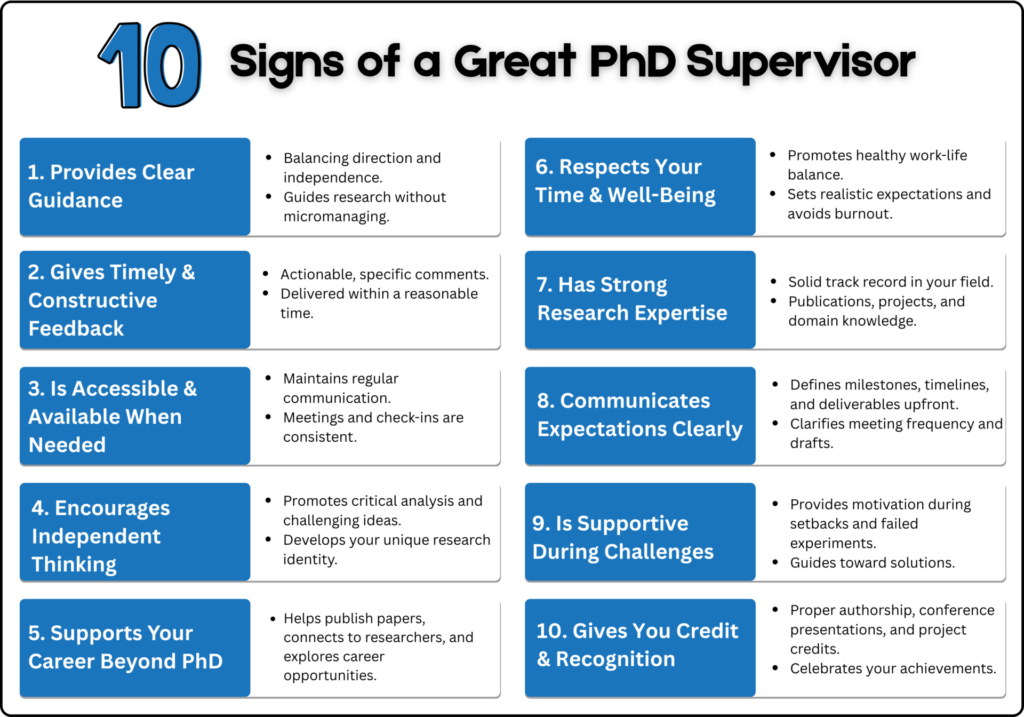
1. Provides Clear Guidance (Without Micromanaging)
A good PhD supervisor gives you direction but doesn’t control every step. They help you define research questions, suggest methodologies, and guide your thinking—while still allowing independence. This balance is crucial for developing as a researcher. Too much control limits creativity, while too little guidance leads to confusion. The best supervisors know when to step in and when to step back.
2. Gives Timely and Constructive Feedback
One of the strongest signs of a good supervisor is how they give feedback. They respond within a reasonable time and provide actionable, specific comments—not vague criticism. Good feedback helps you improve your arguments, structure, and clarity. It also saves months of wasted effort. Delayed or unclear feedback is one of the biggest productivity killers in a PhD.
3. Is Accessible and Available When Needed
A good supervisor is not unreachable. While they may be busy, they maintain regular communication—through meetings, emails, or quick check-ins. You should feel comfortable reaching out when stuck. Accessibility builds trust and ensures that small problems don’t turn into major setbacks. Regular interaction also keeps your research momentum strong.
4. Encourages Independent Thinking
Great supervisors don’t want clones—they want thinkers. They encourage you to challenge ideas, explore new perspectives, and develop your own research identity. Instead of giving all the answers, they ask the right questions. This helps you grow intellectually and prepares you for an academic or industry career where independent thinking is essential.
5. Supports Your Career Beyond the PhD
A good PhD supervisor looks beyond your thesis. They help you publish papers, connect with researchers, attend conferences, and explore career opportunities. Whether you aim for academia or industry, they guide you strategically. Their network and recommendations can significantly impact your future.
6. Respects Your Time and Well-being
PhD burnout is real. A good supervisor understands this and promotes a healthy work-life balance. They set realistic expectations, avoid unnecessary pressure, and respect your personal boundaries. They know that sustainable productivity leads to better research outcomes than constant stress.
7. Has Strong Research Expertise and Experience
Your supervisor should have a solid track record in your research area. This includes publications, projects, and domain knowledge. Their expertise allows them to guide you effectively, identify gaps in your work, and suggest high-impact directions. A knowledgeable supervisor can accelerate your progress significantly.
8. Communicates Expectations Clearly
Misaligned expectations can create frustration. A good supervisor clearly defines milestones, timelines, and deliverables from the beginning. They also explain how often you should meet, what they expect in drafts, and how progress will be evaluated. Clarity prevents misunderstandings and keeps your PhD on track.
9. Is Supportive During Challenges
Every PhD has ups and downs—failed experiments, rejected papers, or writer’s block. A good supervisor supports you during these moments. They motivate you, help you reframe setbacks, and guide you toward solutions. Their support can make a huge difference in maintaining your confidence and persistence.
10. Gives You Credit and Recognition
A good supervisor acknowledges your contributions. Whether it’s authorship on papers, conference presentations, or project credits, they ensure you receive proper recognition. They celebrate your achievements and help you build your academic profile. This not only boosts your confidence but also strengthens your career prospects.
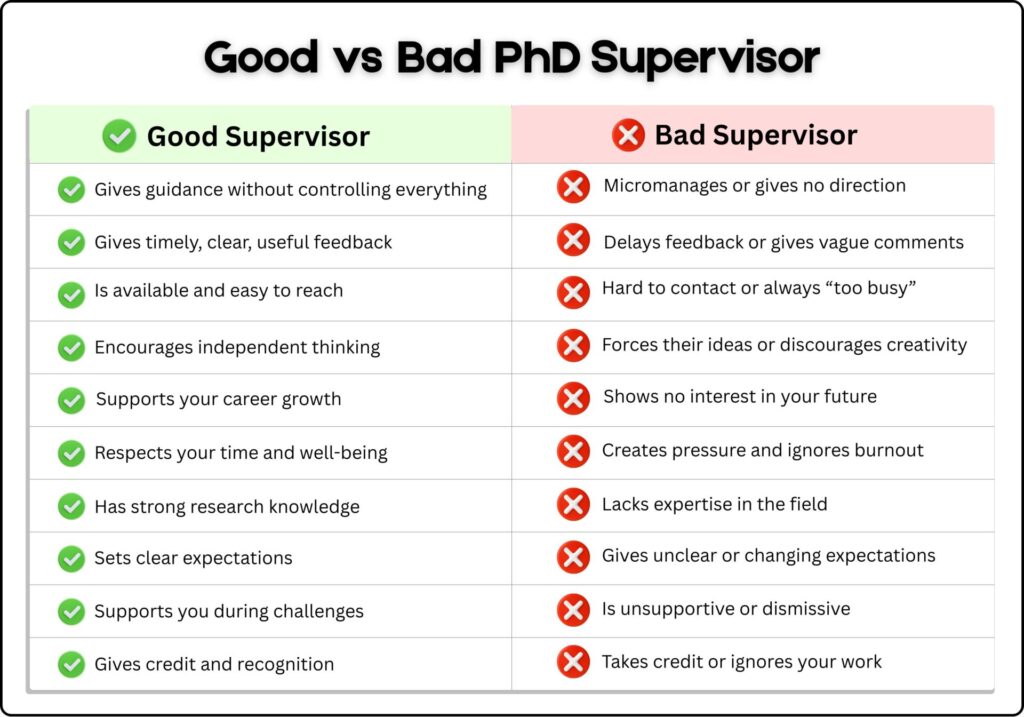
Final Thoughts
A PhD is not just about research—it’s about mentorship.
The right supervisor can turn your PhD into a rewarding, growth-driven experience. The wrong one can make it unnecessarily difficult.
If you already have a supervisor, use these 10 signs as a checklist to assess your experience. If you’re planning to start your PhD, evaluate potential supervisors carefully before making a decision.
Remember: You are not just choosing a research topic—you are choosing a mentor for one of the most important phases of your life.
Dear Dr. Faheem,
Thank you so much for your newsletter update, very good insight and memorable.