Choosing the right research design is one of the most critical decisions in any research project. It shapes how you collect data, analyze results, and ultimately answer your research question. Many researchers struggle not because of weak ideas, but because they select an inappropriate design for their study.
In this blog, you will learn the major types of research designs, when to use them, and how they impact your research outcomes. This guide is written to help PhD students, academics, and researchers make smarter methodological choices.
AI tools of the week:
Emochi: Receive personalized guidance for your PhD

AnswerThis: Conduct literature reviews using AI in minutes

Liner: Helps you to automatically insert citations in your papers

Sciclaw: An AI-powered research assistant for slides and diagrams

What is a Research Design?
A research design is the overall strategy or blueprint that guides your study. It defines how you will collect, measure, and analyze data.
A strong research design ensures:
- Valid and reliable results
- Clear alignment with research objectives
- Efficient use of time and resources
Without a proper design, even a strong research question can fail.
Broad Categories of Research Designs
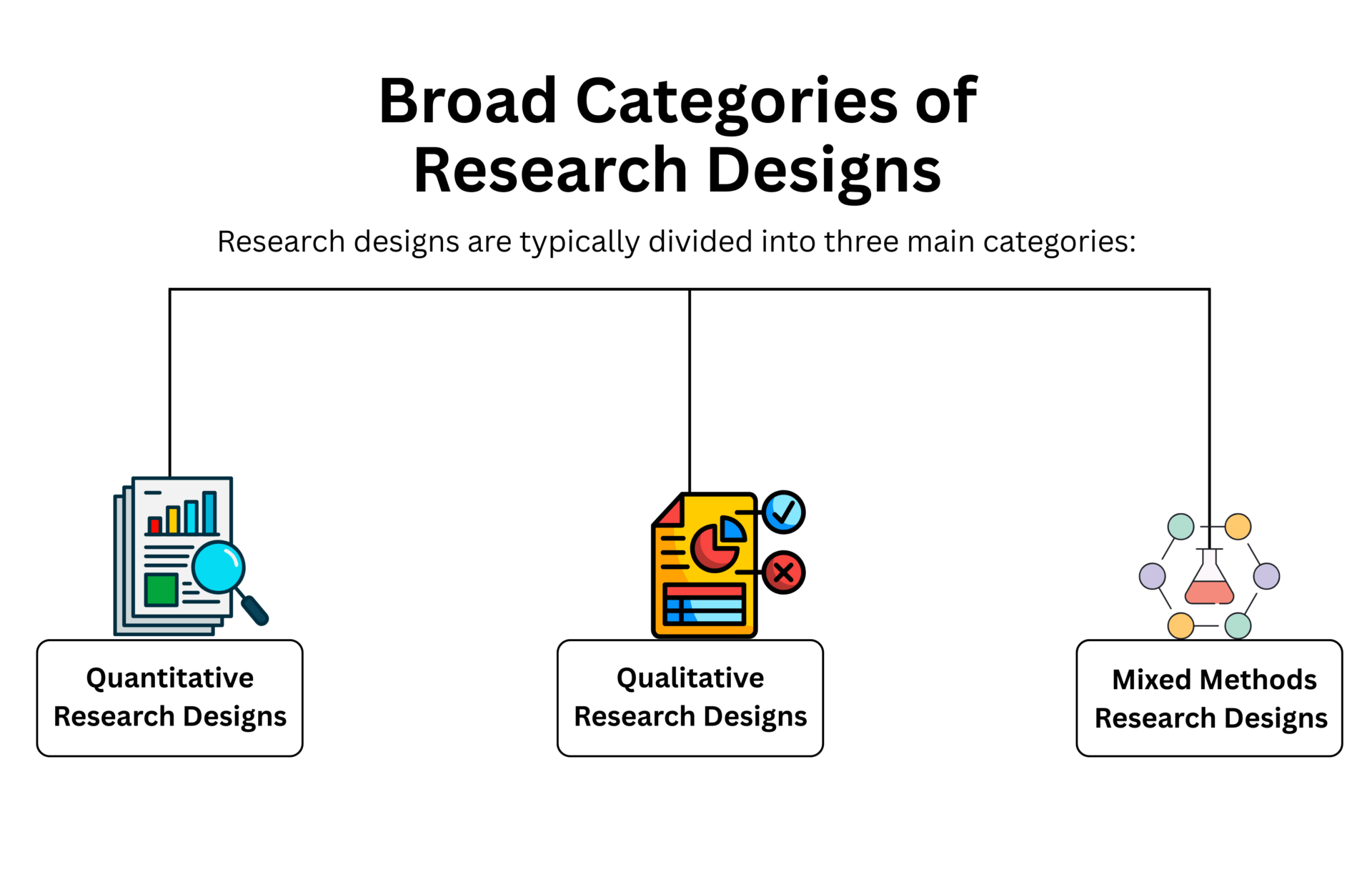
Research designs are typically divided into three main categories:
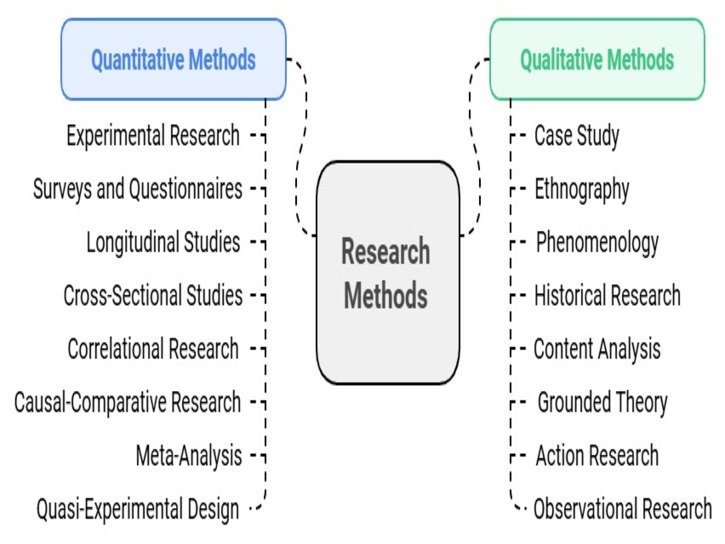
- Quantitative Research Designs
- Qualitative Research Designs
- Mixed Methods Research Designs
Each of these serves a different purpose depending on your research goals.
Quantitative Research Designs
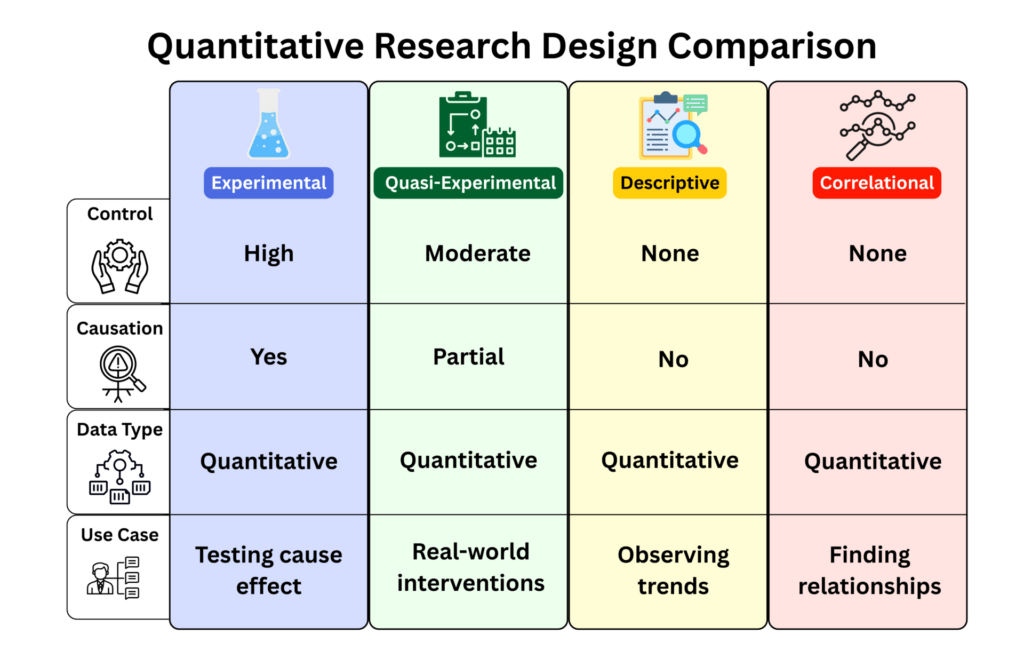
Quantitative research focuses on numerical data, statistical analysis, and measurable outcomes. It is ideal when you want to test hypotheses or establish relationships between variables.
1. Experimental Design
Experimental research is considered the gold standard in research. It involves:
- Manipulating one variable (independent variable)
- Measuring its effect on another (dependent variable)
- Controlling external factors
Example: Testing whether a new teaching method improves student performance.
Key Strength: High control and ability to establish causation.
2. Quasi-Experimental Design
This design is similar to experimental research but lacks full randomization.
Example: Studying the effect of a policy change in a real-world setting where random assignment is not possible.
Key Strength: Practical in real-life scenarios where control is limited.
3. Descriptive Research Design
Descriptive research aims to describe characteristics of a population or phenomenon.
Example: Surveying students to understand study habits.
Key Strength: Provides detailed insights without manipulation.
4. Correlational Research Design
This design examines the relationship between variables without establishing causation.
Example: Exploring the relationship between screen time and academic performance.
Key Strength: Identifies patterns and associations.
Qualitative Research Designs
Qualitative research focuses on understanding experiences, meanings, and perspectives. It is widely used in social sciences, education, and psychology.
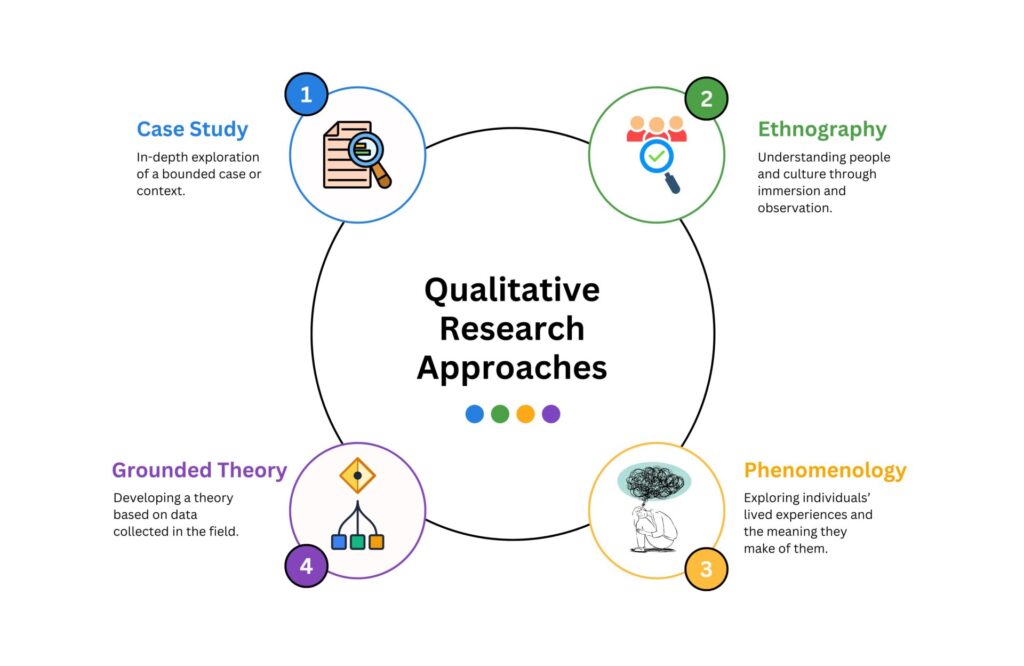
1. Case Study Design
A case study explores a single case or small group in depth.
Example: Studying how one university implemented AI tools in education.
Key Strength: Rich, detailed insights.
2. Ethnographic Design
Ethnography involves studying people in their natural environment over time.
Example: Observing workplace culture in a tech company.
Key Strength: Deep understanding of behavior and context.
3. Phenomenological Design
Ethnography involves studying people in their natural environment over time.
Example: Observing workplace culture in a tech company.
Key Strength: Deep understanding of behavior and context.
3. Phenomenological Design
This design focuses on individual lived experiences.
Example: Understanding how students experience online learning.
Key Strength: Captures human experiences in depth.
4. Grounded Theory
Grounded theory aims to develop a theory based on collected data.
Example: Building a theory of how researchers adopt AI tools.
Key Strength: Theory generation rather than testing.
Mixed Methods Research Design
Mixed methods combine both quantitative and qualitative approaches in a single study.
This design is increasingly popular because it provides:
- Statistical evidence (quantitative)
- Contextual understanding (qualitative)
Types of Mixed Methods Designs
- Sequential Design: One method follows another (e.g., survey → interviews)
- Concurrent Design: Both methods used at the same time
Example: A study measuring student performance (quantitative) and also interviewing students about their learning experience (qualitative).
Key Strength: Provides a more comprehensive understanding.
Exploratory, Explanatory, and Descriptive Designs
Another way to classify research designs is based on purpose:
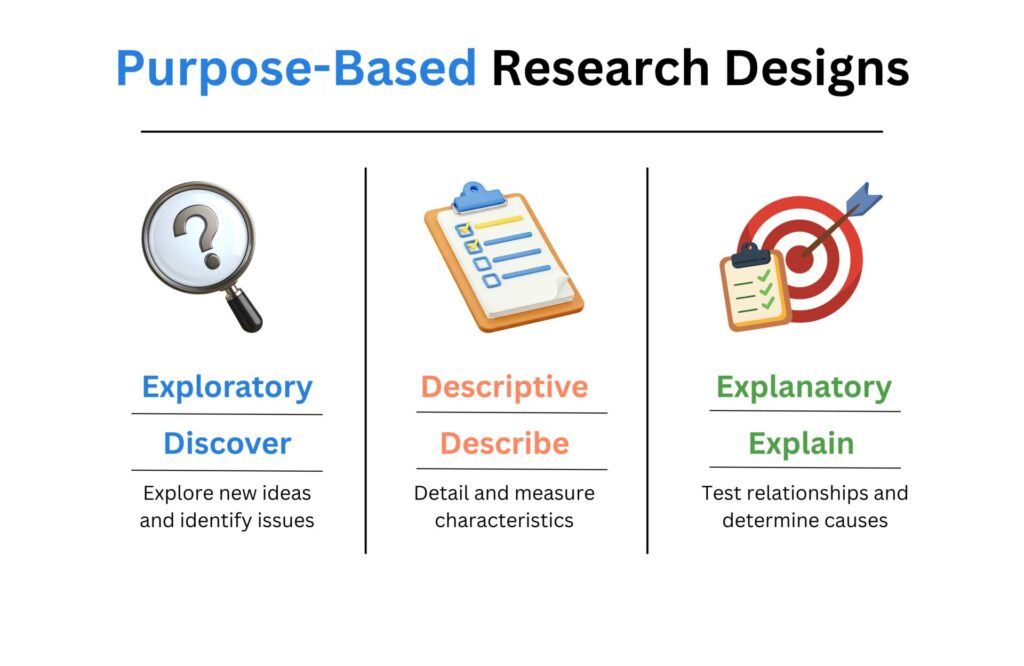
Exploratory Design
Used when the research problem is not clearly defined.
Example: Exploring how AI is changing academic writing.
Explanatory Design
Used to explain relationships or causes.
Example: Why certain students perform better than others.
Descriptive Design
Used to describe characteristics or trends.
Example: Percentage of researchers using AI tools.
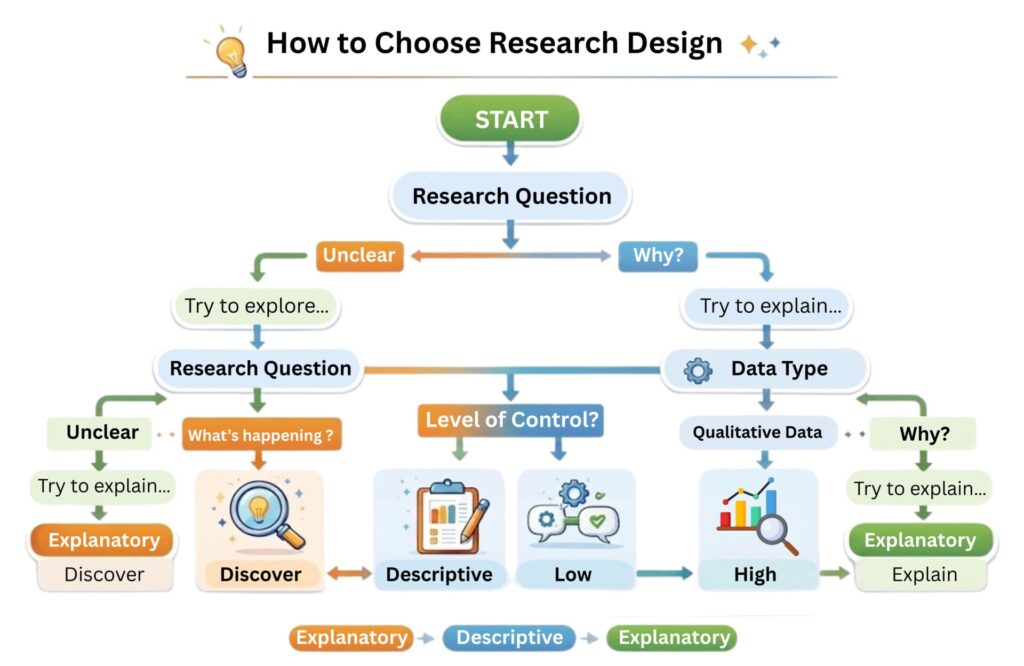
How to Choose the Right Research Design
Selecting the right research design depends on several factors:
1. Research Question
Your design must align with your research objective.
- “What is happening?” → Descriptive
- “Why is it happening?” → Explanatory
- “What does it mean?” → Qualitative
2. Data Type
- Numerical → Quantitative
- Textual/experiential → Qualitative
3. Resources and Time
Experimental studies require more time and control compared to descriptive studies.
4. Level of Control
If you need to establish causation, choose experimental designs. If not, correlational or descriptive designs may be sufficient.
Common Mistakes Researchers Make
Many researchers make avoidable mistakes when selecting research designs:
- Choosing a design without aligning it to the research question
- Confusing correlation with causation
- Using complex designs unnecessarily
- Ignoring practical constraints
Avoiding these mistakes can significantly improve your research quality.
Final Thoughts
Understanding the different types of research designs is essential for conducting high-quality research. Each design serves a specific purpose, and selecting the right one can make the difference between a strong study and a weak one.
As research becomes more interdisciplinary, the ability to combine and adapt designs—especially through mixed methods—will become even more valuable.
If you are starting your research journey, invest time in selecting the right design. It will save you months of effort later and significantly improve your chances of producing impactful research.