

A PhD is one of the most rewarding and challenging journeys you can undertake. It is not just about conducting research or earning a degree. It is about developing the habits, mindset, and resilience needed to solve complex problems and contribute new knowledge to the world.
AI tools of the week:
PatSnap Eureka: AI research agent that turns patents and papers into actionable tech solutions.

Gatsbi: An AI platform for writing papers and literature reviews

ResearchCollab: An AI tool for literature reviews and identifying research gaps.

AnswerThis: An all in one AI platform for researchers

Many students start a PhD believing that intelligence alone determines success. However, after working with researchers and PhD students, I have noticed that success is usually driven by consistent habits rather than raw intelligence. Some students with exceptional talent struggle, while others with average abilities thrive because they develop the right approach.
If you are starting or currently pursuing a PhD, here are the most important things you must do—and the things you must avoid.
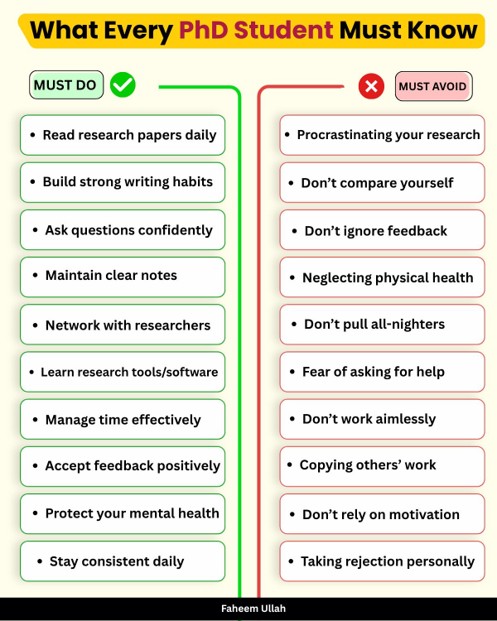
Must Do #1: Read Research Papers Daily
Research papers are the foundation of academic work. Reading regularly helps you stay updated with new developments, identify research gaps, and improve your understanding of your field. Even reading one paper a day can dramatically increase your knowledge over time.
Must Do #2: Build Strong Writing Habits
Writing is one of the most important skills in a PhD. Do not wait until a deadline approaches. Write regularly, whether it is research notes, summaries, reflections, or draft sections of papers. Consistent writing improves both productivity and confidence.
Must Do #3: Ask Questions Confidently
No one starts a PhD knowing everything. Asking questions is a sign of curiosity and engagement, not weakness. Every question you ask helps you learn faster and avoid unnecessary mistakes.
Must Do #4: Maintain Clear Notes
A PhD generates huge amounts of information. Keeping organized notes from papers, meetings, experiments, and supervisor discussions will save countless hours later. Good notes are one of the best investments you can make.
Must Do #5: Network with Researchers
Research is not a solo activity. Building relationships with researchers can lead to collaborations, publications, conference opportunities, and future career prospects. Start building your academic network early.
Must Do #6: Learn Research Tools and Software
Modern researchers have access to powerful tools for literature reviews, reference management, writing, data analysis, and visualization. Learning these tools can significantly increase your efficiency and reduce repetitive work.
Must Do #7: Manage Time Effectively
A PhD gives you a lot of freedom, but freedom without structure can become dangerous. Plan your work carefully, set realistic goals, and break large projects into smaller tasks. Effective time management reduces stress and improves productivity.
Must Do #8: Accept Feedback Positively
Feedback is one of the fastest ways to improve. Supervisors and reviewers are not criticizing you personally; they are helping improve your research. Learn to view feedback as an opportunity rather than a threat.
Must Do #9: Protect Your Mental Health
Research can be stressful and unpredictable. There will be periods of uncertainty, rejection, and frustration. Protecting your mental well-being is just as important as producing results. Take breaks, seek support when needed, and maintain a healthy work-life balance.
Must Do #10: Stay Consistent Daily
The secret to completing a PhD is consistency. Small amounts of progress made every day are more valuable than occasional bursts of productivity. Success comes from showing up and doing the work, even when motivation is low.
What Every PhD Student Must Avoid
While good habits help you succeed, bad habits can quietly derail your progress. Here are ten things every PhD student should avoid.
Must Avoid #1: Procrastinating Your Research
Procrastination is one of the biggest reasons students fall behind. Delaying important tasks only increases stress and reduces the time available for quality work. Start early and make progress before deadlines become urgent.
Must Avoid #2: Comparing Yourself with Others
Every PhD journey is different. Some students publish quickly, while others focus on complex projects that take longer. Constant comparison creates unnecessary anxiety and self-doubt. Focus on your own growth and progress.
Must Avoid #3: Ignoring Feedback
Ignoring supervisor or reviewer comments can seriously slow your development. Even when feedback feels difficult to hear, it often contains valuable insights that can strengthen your research and writing.
Must Avoid #4: Neglecting Physical Health
Poor sleep, unhealthy eating habits, and lack of exercise can reduce your energy, concentration, and productivity. Your health directly affects your ability to conduct high-quality research.
Must Avoid #5: Pulling All-Nighters
Many students think staying awake all night demonstrates dedication. In reality, exhaustion often leads to mistakes, poor decision-making, and lower-quality work. Sustainable productivity always beats extreme working habits.
Must Avoid #6: Fear of Asking for Help
Struggling in silence rarely solves problems. Whether you need technical guidance, research advice, or emotional support, asking for help can save time and reduce stress. Successful researchers know when to seek assistance.
Must Avoid #7: Working Aimlessly
Being busy is not the same as being productive. Without clear goals, it is easy to spend hours working without making meaningful progress. Always know what you are trying to achieve before starting work.
Must Avoid #8: Copying Others’ Work
Academic integrity is non-negotiable. Plagiarism and other forms of academic misconduct can damage your reputation and career. Always give proper credit and maintain the highest ethical standards.
Must Avoid #9: Relying Only on Motivation
Motivation is temporary. Some days you will feel inspired, and other days you will not. Successful PhD students rely on discipline, routines, and habits rather than waiting for motivation to appear.
Must Avoid #10: Taking Rejection Personally
Rejection is a normal part of academic life. Papers are rejected, grants are declined, and conference submissions are sometimes unsuccessful. Do not see rejection as failure. See it as part of the learning process and keep moving forward.
Final Thoughts
A PhD is not won by intelligence alone. It is won through discipline, consistency, learning, and resilience. Read papers daily, write regularly, ask questions, stay organized, build relationships, and take care of your well-being. At the same time, avoid procrastination, unhealthy comparisons, ignoring feedback, poor health habits, and taking rejection personally.
The students who complete their PhDs successfully are not those who never face difficulties. They are the ones who continue moving forward despite them. If you master these 10 things to do and avoid these 10 common mistakes, you will be far better prepared for a successful and rewarding PhD journey.
Dear Dr. Faheem,
Your advise is highly valuable, very important insight, and also interesting as an early career researcher.