Choosing a PhD supervisor is one of the most important decisions you will make during your doctoral journey. Many students spend months selecting a university, research topic, or funding opportunity, but surprisingly little time evaluating their potential supervisor. Yet, your supervisor can significantly influence your research progress, motivation, publication record, and overall PhD experience.
Research consistently shows that the quality of supervision is one of the strongest predictors of PhD completion and student satisfaction. A supportive supervisor can help you grow into an independent researcher, while a poor supervisory relationship can make even the most exciting research topic feel overwhelming.
The reality is that there is no such thing as a “perfect” PhD supervisor. Every supervisor has a different personality, working style, and approach to mentoring students. Understanding these different supervision styles can help you choose a supervisor who matches your needs and expectations.
AI tools of the week:
MoClaw: A personal AI assistant on its own cloud computer

Yomu AI: Write essays, papers, and theses in minutes, not hours.

AnswerThis: An all in one AI platform for researchers

Gatsbi: An AI platform for writing papers and literature reviews

Why Your PhD Supervisor Matters
A PhD is often described as a marathon rather than a sprint. Depending on your field and country, a PhD can take between three and seven years to complete. During this period, your supervisor becomes your mentor, advisor, critic, collaborator, and sometimes even your biggest source of motivation.
Studies have found that poor supervision is among the leading reasons why PhD students experience delays, dissatisfaction, or even leave their programs. On the other hand, students who have positive supervisory relationships tend to publish more papers, complete their degrees faster, and report better mental well-being.
Let’s explore the ten most common types of PhD supervisors.
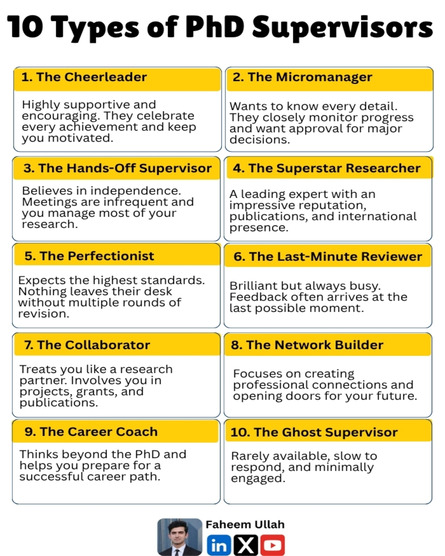
1. The Cheerleader
This supervisor is highly supportive and encouraging. They celebrate every achievement, provide positive feedback, and constantly motivate students to keep moving forward.
Advantages
- Builds confidence and motivation.
- Creates a positive research environment.
- Helpful during difficult periods of the PhD.
Disadvantages
- May avoid giving harsh but necessary criticism.
- Students may not receive enough challenging feedback to improve their work.
This type of supervisor is excellent for students who need encouragement but may not be ideal for those seeking rigorous intellectual debate.
2. The Micromanager
The micromanager wants to know every detail of your research. They frequently request updates, closely monitor progress, and often want approval before every major decision.
Advantages
- Strong guidance for inexperienced researchers.
- Helps students stay organized and focused.
- Problems are identified early.
Disadvantages
- Can limit independence.
- Students may feel restricted or overly controlled.
While this style can be frustrating, many first-year PhD students initially benefit from structured supervision.
3. The Hands-Off Supervisor
This supervisor believes PhD students should learn through independence. Meetings may be infrequent, and students are expected to manage most aspects of their research themselves.
Advantages
- Encourages independence.
- Develops strong problem-solving skills.
- Allows flexibility in research direction.
Disadvantages
- Students may feel unsupported.
- Progress can slow if guidance is needed.
This style works best for highly self-motivated and experienced researchers.
4. The Superstar Researcher
This supervisor is a leading expert in their field, often publishing extensively, speaking at international conferences, and managing large research projects.
Advantages
- Strong academic reputation.
- Excellent networking opportunities.
- Greater visibility for publications.
Disadvantages
- Limited availability.
- Students may receive less personal attention.
Many students are attracted to famous academics, but reputation alone does not guarantee good supervision.
5. The Perfectionist
Nothing leaves this supervisor’s desk without multiple rounds of revision. They pay attention to every detail and expect exceptionally high standards.
Advantages
- Produces high-quality research.
- Improves writing and analytical skills.
- Prepares students for top journals.
Disadvantages
- Feedback cycles can be lengthy.
- Students may feel excessive pressure.
Although demanding, perfectionist supervisors often help students produce outstanding research.
6. The Last-Minute Reviewer
This supervisor is brilliant but always busy. Drafts often remain unread until close to deadlines, and feedback arrives at the last possible moment.
Advantages
- Usually experienced and knowledgeable.
- Feedback can still be valuable.
Disadvantages
- Causes stress and delays.
- Makes planning difficult.
Many PhD students will immediately recognize this type of supervisor.
7. The Collaborator
This supervisor treats students almost like research partners. They actively involve students in projects, grant applications, and publications.
Advantages
- Strong publication opportunities.
- Excellent learning experience.
- Helps students build research portfolios.
Disadvantages
- Boundaries between student and colleague can become unclear.
- Students may take on too many responsibilities.
This is often one of the most rewarding supervision styles for ambitious researchers.
8. The Network Builder
The network builder focuses heavily on creating professional connections. They introduce students to researchers, recommend conference opportunities, and facilitate collaborations.
Advantages
- Expands professional network.
- Creates future career opportunities.
- Increases visibility within the research community.
Disadvantages
- May spend less time on technical guidance.
- Networking may sometimes receive more attention than research development.
Students interested in academic careers often benefit enormously from this type of mentor.
9. The Career Coach
This supervisor thinks beyond the PhD. They help students prepare for academic jobs, industry roles, fellowships, and leadership positions.
Advantages
- Strong career guidance.
- Helps develop transferable skills.
- Supports long-term professional growth.
Disadvantages
- Less focus on day-to-day research details.
- Advice may be influenced by their own career experiences.
This style is increasingly valuable as many PhD graduates pursue careers outside academia.
10. The Ghost Supervisor
Unfortunately, every university has a few of these. The ghost supervisor is rarely available, responds slowly to emails, and provides minimal engagement.
Advantages
- Maximum independence.
Disadvantages
- Lack of support.
- Slow progress.
- Increased stress and uncertainty.
Most students should avoid this supervision style whenever possible.
Which Type of Supervisor Should You Choose?
The truth is that no single supervision style is perfect. The best supervisor for you depends on your personality, experience, and goals.

If you are new to research, a supportive supervisor with structured guidance may be ideal. If you are already an experienced researcher, you may prefer greater independence. Students aiming for academic careers often benefit from supervisors who are collaborators, network builders, or superstar researchers. Those seeking confidence and motivation may thrive under a cheerleader-style mentor.
In my experience working with PhD students, the most successful supervisory relationships often involve a balance of support, challenge, availability, and trust. Students need enough guidance to stay on track but enough freedom to develop independent research skills.
Questions to Ask Before Choosing a Supervisor
Before committing to a supervisor, consider asking:

- How often do you meet your students?
- What is your feedback turnaround time?
- How many PhD students have completed under your supervision?
- How involved are you in publications?
- What are your expectations regarding independence?
- Can I speak with your current or former students?
The answers to these questions often reveal more than a supervisor’s academic reputation.
Final Thoughts
A PhD supervisor can shape your research experience more than almost any other factor. The best supervisors do not simply help students complete a thesis—they help them become confident, independent researchers.
When choosing a supervisor, look beyond publication counts, university rankings, and academic titles. Pay attention to communication style, availability, mentoring approach, and compatibility with your personality.
Remember, the goal is not to find the most famous supervisor. The goal is to find the supervisor who will help you become the best researcher you can be.
Choose wisely. Your future self will thank you.